
How Rethinking trade and cooperation to navigate global shocks
Global trade as well as economic cooperation both is observed to have been bedrock of global prosperity historically, by enabling nations in leveraging core comparative advantages, enhancing productivity as well as fostering innovation. However, the world is also observed series of international shocks, which has ranged from geopolitical conflicts and pandemic situation during Covid-19 outbreak to disruptions in supply chain and crises regarding climate. These have certainly exposed the underlying vulnerabilities of trade frameworks in existence. Contextually, these disruptions would have forced the global policymakers as well as businesses and global organisations for rethinking trade alongside cooperation strategies for establishing resilience and ensuring sustainability, while fostering inclusive growth across the economies.
It is to be seen that the modern trade system is characterised by highly interrelated supply chains as well as Just-in-Time (JIT) models of inventory. These have further demonstrated major fragility in the face of shocks externally (Goldberg and Reed, 2023). For example; it can be stated that the Covid-19 pandemic situation has led towards shutdowns of the factories across the globe, disruptions in logistics and having scarcity of critical goods and services like; medical supplies and semiconductors. Likewise; it is also observed that geopolitical conflicts or tensions such as; Trade War between US and China or Russia’s invasion in Ukraine have disrupted the global supply chain process (Caligiuri et al. 2022). That holistically has led towards inflationary pressures alongside shortage in energy. These crises therefore have highlighted need for more adaptive as well as resilient structure of global trade.
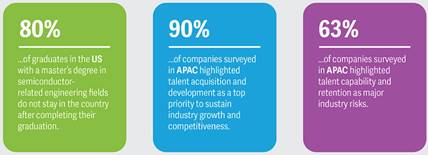
Figure 1: Vulnerabilities in terms of Semiconductor Talent Shortages
(Source: deloitte.com, 2025)
In this context, one of the most striking exemplifications is supply chain vulnerability observed in terms of global shortage of semiconductor. It is to be seen that with production or manufacturing being centred in few locations majorly Taiwan, China and South Korea, disruptions across these regions have severe impact on the industries across the globe (Prantl and Goh, 2022). Furthermore, automakers like; General Motors and Ford had to face force to slow the production volume and level because of shortages in chips, which has certainly resulted in losses at billon of dollars. This crisis therefore has underscored risks regarding over-reliance on particular regions considering critical inputs alongside necessity of diversification in the field of international trade.
Following the discussion, strategies for establishing resilient trade and cooperation are outlined below:
- Supply Chain Diversification: For mitigation of the disruptions in future, nations alongside the corporations should be diversifying their process of supply chain (Zhan, 2021). That is also by sourcing from several regions and contextually, governments have initiated encouraging “nearshoring” alongside “friendshoring”. These are being done by the governments through shifting the production for politically stable as well as geographically closer nations. For example; it can be stated that US and EU are doing investments in the domestic production of semiconductors through core initiatives such as; CHIPS Act alongside European Chips Act for decreasing dependencies on East Asia (Baldwin and Freeman, 2022).
- Strengthened Trade Agreements and Multilateral Cooperation: Furthermore, trade agreements would be playing pivotal role to stabilise commerce globally during the period of crises. Regional trade agreements in this context like; African Continental Free Trade Area (AfCFTA) and Regional Comprehensive Economic Partnership (RCEP) could be enhancing economic integrations, decreasing tariffs and creating supply networks alternatively (Sanasi and Ghezzi, 2024). In this accordance, it can be further stated that strengthening organisations such as; World Trade Organisation (WTO) while fostering cooperation in-depth on the regulations of trade can also be significant to ensure more predictable and environment for fair trading.
- Investments in Smart and Digital Trade Infrastructure: Integrating digital technologies in context of trade processes could majorly enhance the organisational resilience. Contextually, it can be stated that block-chain technology for example might be enabling transparent tracking of goods throughout the supply chain network (Pinchis-Paulsen, 2022). That is also by decreasing the frauds alongside inefficiencies. In this accordance, it is also to be seen that AI or Artificial Intelligence along with Predictive Analytics would be feasible for allowing the companies in anticipating disruptions and adjusting sourcing strategies relevantly (Xiong et al. 2024). Therefore, in this significance, it can be observed that e-commerce platforms such as; Amazon from US and Alibaba from China has leveraged AI-driven logistics operations for optimising performance of the supply chain even during the situation of global pandemic crises.
Correspondently, the lessons from past crises reflected through Financial Crises in 2008 leading towards trade cooperation. The crisis during this period has demonstrated significance of global coordination to mitigate economic sluggishness (Roberts, 2023). Contextually, the G20 nations played crucial role to incorporate coordinated stimulus measures alongside ensuring prevention of spiral into specific protectionism. The crisis situation therefore reinforced idea that liberalisation of trade being coupled with effective regulations in finance would be significant to stabilise global economy.
Figure 2: Global Outlook
(Source: weforum.org, 2025)
Another context of Covid-19 and certain shift towards regionalism can also be considered in this significance. It is to be seen that during the pandemic situation, several countries have imposed restrictions on exports of essential goods like; vaccines and medical supplies. This certainly has led towards trade policies to be re-evaluated, prompting nations for making investments in domestic level of productions alongside supply chains to be regional (Free and Hecimovic, 2021). However, the success of major initiative such as; COVAX programs have aimed at distribution of vaccines that are equitable and has demonstrated importance of global cooperation to address challenges shared.
Based on the above discussion and critical evaluation, it can be comprehended that recent experiences of the global shocks across the world have underscored need for rethinking cooperation as well as trade strategies. Furthermore, moving forward, it can be stated that resilient system of global trade would be requiring supply chains to become diversified, stronger cooperation on multilateral level and investing in infrastructure of digital trade. Significantly, it is also to be considered that while globalisation would remain as the necessary for the growth of the economy, more balanced as well as strategic approach for trade system would be require for helping the nations in navigating disruptions in future. That is also while fostering stability and ensuring growth.
dissertation writing service Leeds , online dissertation writing service Sheffield , Online Assignment help UK
Baldwin, R. and Freeman, R., 2022. Risks and global supply chains: What we know and what we need to know. Annual Review of Economics, 14(1), pp.153-180.
Caligiuri, P., De Cieri, H., Minbaeva, D., Verbeke, A. and Zimmermann, A., 2022. International HRM insights for navigating the COVID-19 pandemic: Implications for future research and practice. In Crises and Disruptions in International Business: How Multinational Enterprises Respond to Crises (pp. 417-454). Cham: Springer International Publishing.
deloitte.com, (2025), 2025 global semiconductor industry outlook, Available at: https://www2.deloitte.com/us/en/insights/industry/technology/technology-media-telecom-outlooks/semiconductor-industry-outlook.html [Accessed on 09.02.2025]
Free, C. and Hecimovic, A., 2021. Global supply chains after COVID-19: the end of the road for neoliberal globalisation?. Accounting, Auditing & Accountability Journal, 34(1), pp.58-84.
Goldberg, P.K. and Reed, T., 2023. Is the global economy deglobalizing? If so, why? And what is next?. Brookings Papers on Economic Activity, 2023(1), pp.347-423.
Pinchis-Paulsen, M., 2022. Let’s agree to disagree: A strategy for trade-security. Journal of International Economic Law, 25(4), pp.527-547.
Prantl, J. and Goh, E., 2022. Rethinking strategy and statecraft for the twenty-first century of complexity: a case for strategic diplomacy. International Affairs, 98(2), pp.443-469.
Roberts, A., 2023. Risk, reward, and resilience framework: integrative policy making in a complex world. Journal of International Economic Law, 26(2), pp.233-265.
Sanasi, S. and Ghezzi, A., 2024. Pivots as strategic responses to crises: Evidence from Italian companies navigating Covid-19. Strategic Organization, 22(3), pp.495-529.
weforum.org, (2025), Global Risks Report 2023, Available at: https://www.weforum.org/publications/global-risks-report-2023/digest/ [Accessed on 09.02.2025]
Xiong, W., Wu, D.D. and Yeung, J.H., 2024. Semiconductor supply chain resilience and disruption: Insights, mitigation, and future directions. International Journal of Production Research, pp.1-24.
Zhan, J.X., 2021. GVC transformation and a new investment landscape in the 2020s: Driving forces, directions, and a forward-looking research and policy agenda. Journal of International Business Policy, 4(2), pp.206-220.
academhelper.com academhelper.com
"Looking for a Similar Assignment? Get Expert Help at an Amazing Discount!"


